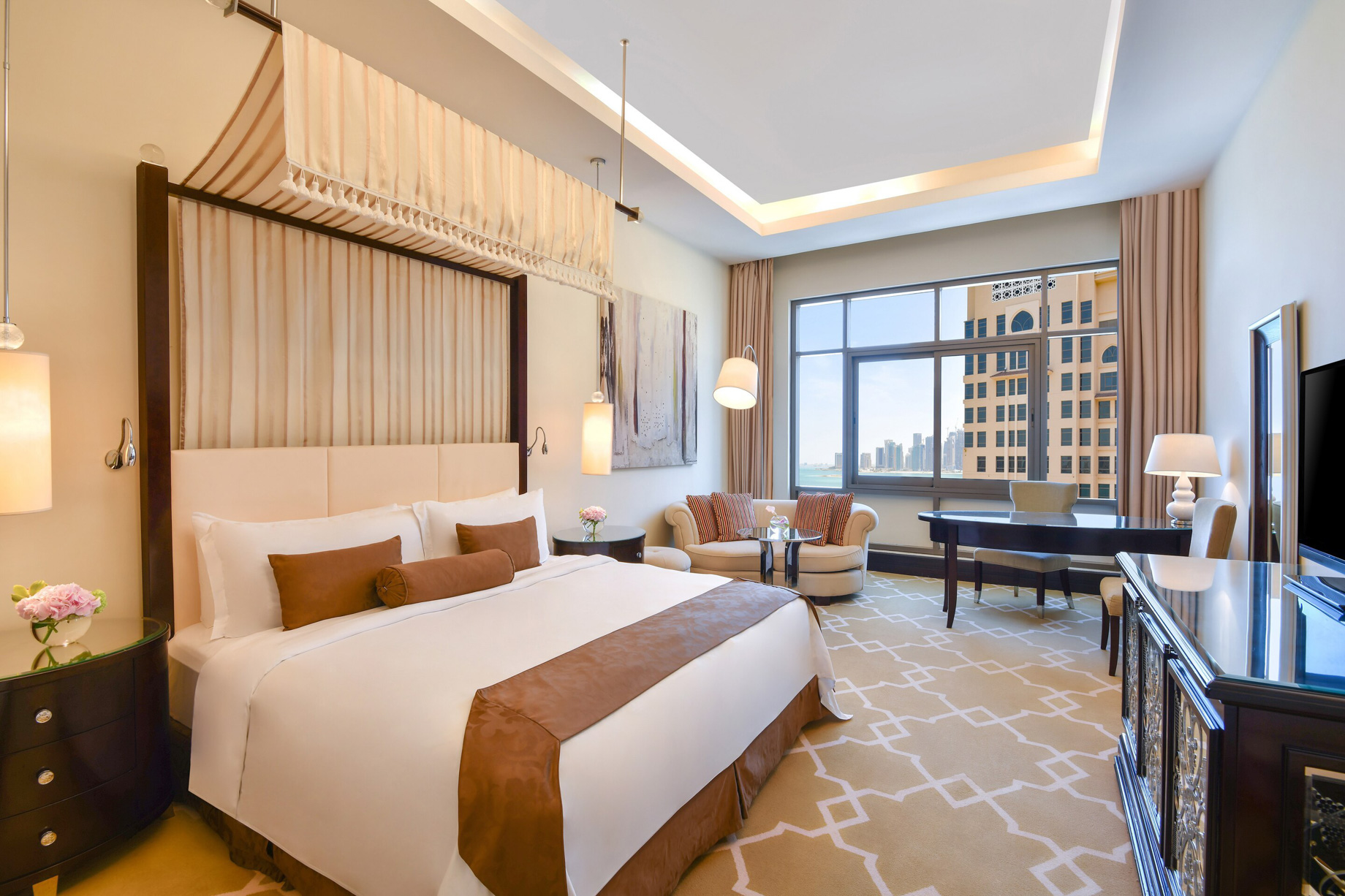
Building a Smarter Hotel Strategy for a Qatar Trip
Selecting accommodation in Qatar can be approached as a strategic travel decision rather than a simple search for an attractive room. The most successful hotel choice is usually the one that supports the entire itinerary: where the traveler needs to go, how much time will be spent inside the property, what type of room is required, which services are genuinely useful, and how easily the guest can move between the hotel and the rest of the destination. When these factors are evaluated together, accommodation becomes an important tool for improving convenience, comfort, and overall travel efficiency.
Qatar offers a broad range of accommodation environments, from contemporary city hotels and business-focused properties to resort-style stays, family-oriented accommodation, extended-stay residences, and properties positioned near major attractions. This variety creates excellent choice, but it can also make the selection process more complicated. Two hotels can appear similar in photographs while offering very different experiences once location, room configuration, transportation, and daily routines are considered.
A useful starting point for travelers comparing the national accommodation landscape is Hotels & Resorts in Qatar. Instead of choosing immediately, travelers can use a destination-wide perspective to understand the types of properties available and then narrow the search according to the purpose of the journey.
The first principle is simple: a hotel should solve the traveler’s practical requirements before it satisfies secondary preferences. A beautiful lobby is valuable, but it should not outweigh an inconvenient location if the guest has several daily appointments. A large room is attractive, but it may not justify additional cost if the traveler spends almost all day exploring the destination. Similarly, an extensive list of facilities has limited value if the guest will not use them.
Professional hotel selection therefore begins by identifying the actual travel profile. Is the trip business-oriented, family-focused, leisure-driven, extended, short, event-related, or built around exploration? Once the profile is clear, the right hotel characteristics become easier to recognize and compare.
Core planning principle: Choose the accommodation that makes the itinerary easier, not simply the property that looks most impressive in promotional photography.
Location First: Why the Right Neighborhood Can Change the Entire Stay
Location is one of the strongest determinants of hotel value because it influences almost every part of the guest experience. It affects transportation time, access to attractions, ease of reaching meetings, availability of nearby services, parking convenience, and the amount of energy required to move around the destination. A room can be exceptionally comfortable, but if the hotel is poorly positioned for the traveler’s itinerary, that comfort may be offset by repeated journeys.
Doha is particularly interesting because different districts can create very different travel experiences. Some areas are suited to business activity and commercial access, while others emphasize waterfront surroundings, cultural experiences, shopping, entertainment, or a more relaxed atmosphere. Travelers should therefore avoid treating Doha as a single homogeneous hotel market.
Guests who already know that the capital will be their base can begin with Hotels in Doha and then compare properties according to the places they expect to visit most frequently. The objective is not necessarily to select the hotel closest to one landmark. It is to identify the location that provides the best overall balance across the complete itinerary.
For example, a traveler attending meetings in several parts of the city may benefit from a strategically central position rather than a hotel directly beside one office. A leisure traveler may prefer to be closer to the destinations they intend to explore. A family may prioritize easy vehicle access, parking, spacious rooms, and proximity to everyday services.
Travelers should also consider the difference between geographical distance and practical travel time. Roads, traffic patterns, entrances, parking arrangements, and the timing of daily activities can all affect how convenient a location feels. Looking only at straight-line distance can therefore produce an inaccurate impression of accessibility.
Another useful technique is to calculate the number of daily journeys. If a hotel eliminates three or four unnecessary trips over several days, the value of its location can become substantial. Time saved can be used for sightseeing, meetings, rest, meals, or other activities that contribute directly to the purpose of the trip.
Location also affects the character of the evening. Some travelers want to return to a lively urban environment after a day of activities. Others prefer a quieter setting where the pace slows down after sunset. The right choice should reflect the traveler’s preferred daily rhythm.
For this reason, location should normally be evaluated before decorative features. Once the appropriate area has been identified, the room, facilities, service level, and design can be compared within that geographic framework.
Doha or Al Wakrah: Comparing Accommodation According to Travel Purpose
Choosing between different parts of Qatar should be based on the itinerary rather than the assumption that one destination is universally superior. Doha can provide strong access to major urban activities, business districts, cultural destinations, shopping areas, and a broad selection of accommodation. Al Wakrah can offer a different environment and may be appropriate for travelers whose plans or preferences make southern Qatar more convenient.
Travelers considering the latter can review Hotels in Al Wakrah and compare the area with their intended route. The relevant question is not simply whether the hotel is attractive, but whether its location works with the places the traveler plans to visit.
A destination comparison should include the expected frequency of travel. Someone spending most of the trip in central Doha may benefit from remaining in the capital. A traveler whose schedule includes destinations farther south may find a different base more practical. A visitor who values a quieter pace may also weigh atmosphere more heavily than a traveler whose schedule is dominated by meetings.
The decision can be made more precise by dividing the itinerary into three categories: essential destinations, occasional destinations, and optional destinations. The hotel should ideally provide convenient access to the essential locations. Occasional destinations can require longer journeys without becoming a major problem, while optional destinations should not dictate the hotel choice unless they are a central part of the experience.
This method avoids a common planning error: selecting accommodation based on one attractive location and then discovering that most of the itinerary is elsewhere.
For a broader overview, travelers can compare Hotels & Resorts in Qatar before narrowing their search to a specific city or district. This creates a more balanced picture of available accommodation rather than beginning with one property and trying to adapt the entire trip around it.
Choosing the Correct Room Instead of Simply Choosing a Higher Category
Hotel room categories can create confusion because terminology varies significantly between properties. A superior room at one hotel may offer a different combination of space, views, furnishings, and services from a similarly named category at another property. Professional comparison therefore requires looking beyond the marketing name.
Room size is one of the first specifications to examine. Square meters or square feet provide a more objective indication of usable space than labels such as “premium” or “deluxe.” However, size alone does not tell the whole story. Layout, furniture placement, storage, bathroom design, and circulation space determine how comfortable the room actually feels.
Bed configuration should also be confirmed before reservation. Couples may prefer a king bed, colleagues may require separate beds, and families may need additional sleeping arrangements. Maximum occupancy should be checked rather than assumed.
| Room Element |
What Professional Travelers Should Verify |
Practical Importance |
| Room Area |
Actual square meters or square feet |
Helps determine usable space for luggage, work, relaxation, and movement. |
| Bed Configuration |
King, queen, twin, sofa bed or other option |
Ensures the sleeping arrangement matches the people traveling. |
| Occupancy |
Maximum adults and children |
Prevents selecting a room that does not legally or practically fit the group. |
| Bathroom |
Shower, bathtub, vanity, separate facilities and accessibility |
Strongly affects daily convenience and comfort. |
| Workspace |
Desk, chair, lighting and power points |
Important for remote work and business travel. |
| Storage |
Wardrobe, drawers and luggage area |
Becomes increasingly important during longer stays. |
| View |
City, sea, garden, courtyard or other outlook |
Can influence atmosphere, natural light and perceived value. |
| Connectivity |
Wi-Fi availability and practical charging access |
Supports work, communication, navigation and entertainment. |
Travelers should also distinguish between a room and a suite according to how they intend to use the space. A suite with separate living and sleeping areas can be valuable for families, long stays, or professionals who need to work without turning the bedroom into an office. However, a suite is not automatically better if the traveler will barely use the additional space.
Another important factor is the position of the room within the hotel. Travelers sensitive to sound may prefer rooms away from elevators, busy corridors, service areas, or other high-traffic locations. Guests who value natural light may have preferences concerning orientation and views.
The most suitable room is therefore the one whose configuration matches the traveler’s actual behavior. Higher category does not necessarily mean higher personal value.
Amenity Selection: Separating Genuine Value From Marketing Noise
Hotels often present long amenity lists, but a professional traveler should not treat every facility as equally important. The correct question is whether a particular feature improves the specific stay.
Reliable Connectivity
Strong internet access can be essential for business, communication, navigation, reservations, and everyday travel organization.
Comfortable Workspace
A proper desk and supportive chair can transform a room into an effective temporary office.
Well-Designed Bathroom
Practical layout, quality lighting, suitable storage and comfortable shower arrangements can improve every morning and evening.
Fitness Facilities
Useful for travelers who want to maintain established routines while away from home.
Parking
Particularly valuable for guests using a private or rental vehicle and managing several daily journeys.
Laundry Support
Increasingly useful during longer stays, especially for travelers carrying limited luggage.
Amenity value depends on frequency of use. A traveler staying one night may have little reason to prioritize facilities that require significant time to enjoy. A guest staying for two weeks may place considerable value on them.
Technology deserves special attention because good hotel technology should make the stay easier rather than more complicated. Convenient charging points, reliable internet, simple room controls, useful television systems, and efficient communication channels can improve the experience without becoming the focus of it.
Fitness and wellness facilities can also contribute to consistency during travel. Guests who maintain regular routines may find it easier to continue them when the hotel provides convenient facilities on site.
Families should evaluate amenities according to how they reduce daily friction. Room layout, storage, practical dining access, transportation, and suitable recreation can be more useful than a long list of minor extras.
When comparing options, travelers should create a personal amenity ranking. Mark each facility as essential, useful, optional, or irrelevant. This simple system can prevent marketing language from influencing the decision more than actual travel requirements.
Accommodation research can be expanded through The Travel Journal, particularly when travelers want to connect their hotel choice with broader destination planning.
Business Hotel Selection: Productivity, Efficiency and Recovery
Business travelers should evaluate accommodation as a temporary productivity environment. The room is not simply a place to sleep; it may become a workspace, communication center, preparation area, and recovery environment between meetings.
A proper desk can be more valuable than decorative furniture. The traveler should look for sufficient surface area, a comfortable chair, useful lighting, and accessible power. If virtual meetings are expected, room acoustics and a quiet environment become additional considerations.
Internet reliability is another central factor. Business travelers may need to participate in meetings, transfer documents, communicate with colleagues, manage schedules, and access cloud-based systems. Connectivity should therefore be treated as a core requirement.
Location should be assessed across the complete business schedule. If meetings occur in multiple areas, a strategically positioned hotel can reduce total travel time. If the trip centers on one venue, proximity to that location may be more valuable.
Arrival and departure efficiency also matter. A smooth check-in process, practical luggage handling, accessible transportation, and responsive hotel communication can protect valuable time.
After a demanding workday, the room needs to support recovery. Comfortable bedding, effective climate control, suitable lighting, seating, and a calm environment can help the traveler transition from work to rest.
Business travelers should therefore avoid evaluating hotels exclusively by star category or brand recognition. The better question is how well the property supports the actual workflow of the trip.
Those planning a Doha business visit can use Hotels in Doha as a starting point, then evaluate each property according to workspace, location, transportation, and service requirements.
Family Accommodation: Space, Routine and Daily Convenience
Family travel introduces multiple simultaneous needs. Parents may require quiet space, children need appropriate sleeping arrangements, and everyone benefits from practical storage and easy movement. The ideal family hotel is therefore one that minimizes daily friction.
Occupancy rules should be checked carefully. The number of beds shown in a photograph does not necessarily represent the permitted number of guests. Families should confirm the official occupancy and investigate whether additional bedding, connecting rooms, or suitable suite configurations are available.
Room layout is equally important. Two rooms connected by an internal door can provide a different experience from a single large room. A suite with a separate living area can allow parents and children to use different zones without requiring multiple independent rooms.
Bathroom arrangements deserve attention because several family members often prepare at the same time. Storage also becomes important because families tend to carry more luggage and personal items.
Location affects family comfort as well. A hotel close to the most important activities can reduce transportation time and make it easier to return to the room during the day. Convenient parking can be valuable for families traveling by car.
Families comparing Qatar destinations can review Hotels in Al Wakrah alongside Doha options, particularly when the itinerary includes areas outside the capital.
The strongest family hotel choice is not necessarily the most luxurious property. It is the property that provides sufficient space, suitable sleeping arrangements, manageable transportation, and facilities that make everyday routines easier.
Long-Stay Accommodation: Evaluating the Hotel as a Temporary Home
A hotel designed for a short visit does not automatically provide the best experience for a longer stay. As the number of nights increases, small inconveniences become more noticeable. Storage, laundry, workspace, room layout, transportation, and access to everyday services can become more important than decorative features.
Long-stay travelers should imagine living in the room rather than simply sleeping there. Where will clothing be stored? Where will luggage remain? Where will work take place? Where can the traveler sit comfortably for an extended period? How easy will it be to maintain normal routines?
Suites and residential-style rooms can provide advantages because separate zones allow the guest to work, eat, relax, and sleep without everything happening in one space.
Kitchen or kitchenette facilities, where available, can add flexibility. Laundry services can also become a significant convenience for guests staying many nights.
Neighborhood services should be evaluated as part of the accommodation decision. Access to everyday shopping, transportation, restaurants, and other useful facilities can reduce the effort required to manage a long stay.
Travelers who expect to drive frequently should consider a combination of hotel location and Rent a car planning. The best long-stay accommodation is one that remains convenient after the initial excitement of arrival has disappeared.
Livability is the key standard. If the room remains comfortable, organized, practical, and convenient after several days, it is much more likely to be a successful long-term choice.
Transportation Should Be Part of the Hotel Budget
One of the most common hotel-planning mistakes is to compare nightly rates without considering transportation. A lower room price can become less attractive if the location creates repeated journeys, parking costs, or additional travel time.
Transportation should therefore be calculated as part of the accommodation budget. Estimate the number of trips, likely distances, parking requirements, and transportation method. Then compare the total travel burden between shortlisted properties.
Driving provides flexibility but introduces parking and vehicle-management considerations. Travelers should investigate hotel parking arrangements and access before arrival rather than assuming that parking will automatically be convenient.
Guests who intend to explore several parts of Qatar may find a rental vehicle useful. In that situation, Rent a car planning should be coordinated with the hotel location. A hotel with easy road access may be more useful than one that appears slightly closer to a single attraction.
Airport transfers also deserve attention. Arrival after a long flight can make a simple, predictable transfer especially valuable. The same principle applies to departure day, when luggage, timing, and airport access can create additional pressure.
Business travelers should estimate transportation based on the entire meeting schedule. Families should consider luggage and children. Leisure travelers should evaluate whether transportation will support the experiences they actually want to have.
By treating transportation as part of hotel selection, travelers gain a much more accurate picture of total value.
How to Judge Hotel Design Beyond Photographs
Hotel photography is useful, but professional evaluation requires more than visual appeal. A room can look luxurious in a photograph while being less practical in daily use. Travelers should examine how the space is organized and whether the design supports real behavior.
Natural light is one important element. Large windows can make rooms feel spacious and connected to the destination. However, good curtains or shades are equally important because guests need control over brightness and privacy.
Furniture placement should create clear zones. The bed should not dominate every available pathway, and work or seating areas should feel intentional rather than squeezed into unused corners.
Lighting should also be layered. General lighting, bedside lighting, desk lighting, and softer evening illumination can make a room much more adaptable. A room that looks attractive under professional photography may feel less comfortable if its lighting is difficult to control.
Storage design is another indicator of thoughtful planning. Wardrobes, drawers, luggage benches, and bedside surfaces should be positioned so that the room remains organized during the stay.
Materials and colors influence atmosphere, but functionality remains the foundation. A successful hotel room combines attractive design with intuitive use.
Travelers should therefore look for photographs showing multiple angles, bathrooms, work areas, seating areas, and storage where possible. This gives a more realistic understanding of how the room may function.
Views and Natural Light: When Paying More Can Make Sense
A room view can be one of the most noticeable differences between accommodation categories. City views, waterfront outlooks, landscaped surroundings, and open horizons can influence how a traveler experiences the room, especially when significant time is spent indoors.
However, the value of a view depends on the itinerary. A traveler who leaves the hotel early and returns late may not use the view enough to justify a substantial premium. A leisure traveler who expects to spend afternoons relaxing in the room may value it much more.
Natural light can also affect perceived room quality. Bright daytime environments can feel more open, while controllable lighting and effective shades are important for evening comfort and daytime rest.
Travelers should avoid assuming that every room in a property offers the same outlook. Room position, floor level, orientation, and category can all affect the actual experience.
A professional comparison should therefore treat the view as a preference that can be weighted according to the travel purpose rather than as an automatic reason to choose a more expensive room.
How to Read Hotel Reviews Like a Professional
Online reviews can provide useful information, but they are most effective when read with a clear objective. Instead of looking only at overall ratings, travelers should search for comments connected to their personal priorities.
A business traveler should pay attention to workspace, internet reliability, noise, location, and check-in efficiency. A family should look for comments about room size, sleeping arrangements, cleanliness, transportation, and practical facilities. A long-stay guest should search for observations about storage, housekeeping consistency, laundry, and everyday convenience.
Recurring patterns are usually more meaningful than isolated comments. If multiple unrelated guests describe the same issue, it deserves investigation. A single unusual complaint should be considered in context.
Recent reviews can also be especially useful because hotel operations change over time. Renovations, management changes, updated facilities, and revised service procedures can alter the guest experience.
Travelers should also compare comments from different traveler profiles. A hotel can be excellent for business travel but less suitable for a family, or excellent for short stays but less practical for extended visits.
Review analysis should therefore be treated as evidence rather than a final decision. The traveler should first define requirements, shortlist suitable properties, and then use reviews to test whether those properties consistently meet expectations.
Destination-focused planning resources such as The Travel Journal can complement review research by helping travelers understand how accommodation fits within a broader itinerary.
Accessibility and Practical Room Design
Accessibility should be treated as a specific functional requirement whenever it is relevant to the traveler. General descriptions are not always enough, so guests with specific needs should verify the details that matter before finalizing a reservation.
Important considerations can include step-free access, elevator availability, door width, bathroom layout, shower design, room circulation, accessible parking, and the location of important facilities. Written confirmation can be useful when a requirement is essential.
Practical accessibility features can also improve comfort for travelers without specific accessibility requirements. Clear pathways, sensible furniture placement, easy-to-reach controls, good lighting, and well-designed bathrooms can make the room easier for everyone to use.
Older travelers, families with young children, and guests carrying substantial luggage may all benefit from practical room design.
When comparing accommodation, accessibility should therefore be evaluated as part of overall usability rather than treated as a separate afterthought.
Creating a Hotel Shortlist That Is Easy to Compare
A professional shortlist should be limited enough to remain manageable while offering sufficient alternatives. Instead of reviewing dozens of properties in detail, travelers can begin with a broader search and then eliminate options that fail essential requirements.
The first filter should be location. If a hotel is poorly positioned for the itinerary, there is usually little reason to continue comparing its decorative features.
The second filter should be room suitability. Check occupancy, bed type, size, bathroom configuration, workspace, and storage.
The third filter should be transportation. Consider parking, road access, transfers, and daily travel requirements.
The fourth filter should be useful facilities. Identify which amenities are genuinely important and remove properties that do not provide essential features.
The fifth filter should be value. Compare total costs and practical benefits rather than nightly rate alone.
Professional Hotel Shortlist Checklist
- Define the primary purpose of the trip.
- Identify the locations that will be visited most frequently.
- Choose the most practical destination or neighborhood.
- Set a realistic accommodation budget.
- Confirm room occupancy requirements.
- Compare room dimensions and layouts.
- Verify bed configuration.
- Check bathroom and accessibility requirements.
- Evaluate workspace and connectivity.
- Review parking and transportation needs.
- Identify the amenities that genuinely matter.
- Read recent reviews for recurring patterns.
- Compare total convenience, not only the room rate.
- Confirm special requests before arrival.
This process produces a shortlist that is based on evidence rather than impulse. It also makes it easier to explain why one property is a stronger choice than another.
Travelers can use Booking resources after the shortlist is established, rather than allowing the reservation interface itself to determine the decision.
Understanding Hotel Value From a Total-Cost Perspective
Price remains an important part of hotel selection, but value should be evaluated against the entire trip. A room with a slightly higher rate may offer better overall value if it reduces transportation time, provides a more appropriate room configuration, or includes facilities the traveler would otherwise need to obtain elsewhere.
For families, a larger room or suite may eliminate the need for separate accommodation. For business travelers, a well-designed workspace may reduce the need to search for external work environments. For long stays, laundry facilities and storage can simplify daily life.
Transportation is another important component. If one hotel saves substantial daily travel time, the difference in room rate may be easier to justify. The traveler should calculate not only financial cost but also time cost.
Time has practical value. An extra hour spent traveling every day can become several hours over a multi-night stay. That time could otherwise be used for rest, sightseeing, work, or family activities.
Value is therefore a combination of price, convenience, comfort, and suitability. The cheapest hotel is not automatically the most economical, and the most expensive hotel is not automatically the best value.
A structured comparison helps make this distinction clear.
Planning a Qatar Hotel Stay Around the Daily Schedule
One of the most effective hotel-selection methods is to simulate a typical day before making the reservation. Imagine waking up, getting ready, leaving the property, reaching the first destination, returning later, and preparing for the evening.
Ask where the hotel creates convenience and where it may create friction. Is breakfast practical for the schedule? Is transportation easy? Is parking accessible? Can the traveler return to the hotel during the day without losing too much time?
Business travelers can simulate a meeting day. Families can simulate a sightseeing day with children. Long-stay guests can simulate a normal weekday involving work, meals, errands, and rest.
This exercise often reveals differences between properties that are difficult to see in photographs.
A hotel should fit the traveler’s rhythm. If the accommodation repeatedly forces the traveler to reorganize the itinerary, its apparent advantages may not be meaningful.
Guests planning different parts of Qatar can compare Hotels in Doha with Hotels in Al Wakrah according to the actual movement pattern rather than selecting an area based on reputation alone.
When a Hotel Upgrade Is Actually Worth Considering
Upgrading a room can make sense when the additional features directly address the traveler’s priorities. The decision should not be based solely on the assumption that a higher category automatically creates a better experience.
An upgrade may be valuable when it provides substantially more usable space, a separate living area, a better workspace, improved views, a more suitable sleeping configuration, or facilities that will be used frequently.
For a long stay, additional space can become increasingly valuable because the room effectively becomes a temporary home. For families, an upgrade may improve privacy and organization. For business travelers, a suite with a dedicated work area can support productivity.
For a short leisure stay, the calculation is different. A traveler may prefer to allocate the additional budget toward experiences outside the hotel instead of paying for a larger room that will be used only briefly.
The best upgrade decision is therefore based on frequency of use. If the traveler will use the additional feature every day, the upgrade may provide strong value. If the feature will barely be noticed, the additional cost may be better allocated elsewhere.
Using Hotel and Car-Rental Planning as One Decision
Accommodation and vehicle planning should not always be treated as independent decisions. The hotel affects how useful a rental vehicle will be, while the vehicle can expand the range of accommodation locations that are practical.
Travelers who plan to drive should evaluate road access, parking, daily distances, and the number of destinations included in the itinerary. A hotel slightly outside the most central area may become highly practical if it provides easier road access and convenient parking.
On the other hand, travelers who do not need a vehicle may place greater emphasis on a central location and transportation availability.
Rental planning can be integrated through Rent a car resources. The objective is to create a transportation strategy that complements the hotel rather than forcing the traveler to adapt after arrival.
This approach is particularly useful for travelers who expect to visit several destinations during the same trip. Instead of choosing the hotel first and transportation later, evaluate the complete movement system at the same time.
Service Quality and the Professional Hotel Experience
Service quality can have a major influence on the overall impression of a hotel. While design and facilities are easy to photograph, service is experienced through hundreds of small interactions: communication before arrival, check-in, assistance with requests, housekeeping, transportation support, and departure procedures.
Professional travelers often value consistency more than dramatic gestures. A hotel that communicates clearly, responds efficiently, and handles routine requests reliably can provide substantial practical value.
Pre-arrival communication is particularly useful when the traveler has specific requirements. Confirming room configuration, occupancy, accessibility, transportation, or other arrangements can reduce uncertainty.
Housekeeping consistency also matters during longer stays. Guests should understand the available service arrangements and communicate preferences when necessary.
Business travelers may place a high value on response speed because delays can interfere with schedules. Families may appreciate staff who can help solve practical problems quickly. Leisure travelers may value assistance that makes destination planning easier.
Service should therefore be evaluated according to the traveler’s priorities rather than simply the number of staff or visible luxury elements.
Additional destination content can be found through The Travel Journal, which can be useful when accommodation planning is part of a larger travel research process.
Designing the Ideal Room Environment for Rest
A successful hotel room should make it easy to transition from activity to rest. This involves more than mattress quality. Lighting, temperature, sound, curtains, seating, and room organization all contribute to the sense of comfort.
Lighting should provide enough flexibility for different activities. Guests may want bright light while preparing for the day, focused illumination while working, and softer lighting during the evening.
Temperature control should also be intuitive. A room that is difficult to regulate can become uncomfortable regardless of how attractive the furnishings are.
Noise is another critical consideration. Travelers who are sensitive to sound may prefer rooms away from busy corridors, elevators, service areas, or high-traffic streets.
Room organization can influence relaxation as well. Luggage should have a logical place, clothing should be easy to store, and frequently used items should not require constant rearrangement.
These details may appear small individually, but together they determine whether the room feels genuinely comfortable over several nights.
How Leisure Travelers Can Prioritize Experience
Leisure travelers generally have more freedom to choose accommodation according to atmosphere and experience. The hotel can become part of the destination rather than simply a base for sleeping.
In this case, design, views, public spaces, wellness facilities, pools, seating areas, and neighborhood character may deserve greater weight. However, the same principle of practical alignment still applies.
A leisure traveler who plans to spend most days exploring may prefer a strategically located hotel rather than an elaborate property far from the main itinerary. A traveler planning a slower stay may place greater value on facilities within the hotel itself.
The amount of time spent at the property is therefore the key variable. More time inside means that room atmosphere and facilities become more valuable. More time outside means that location and transportation may dominate.
This distinction helps travelers avoid paying for features they will not use.
How Couples and Independent Travelers Can Compare Accommodation
Couples and independent travelers often have more flexibility in room configuration, which can make other factors more important. Atmosphere, location, views, comfortable seating, privacy, and access to preferred activities may become central considerations.
A couple planning a city-focused trip may prefer a centrally positioned room with convenient access to attractions. Another couple may prefer a more relaxed environment where the hotel itself is part of the experience.
Independent travelers may place greater value on efficient transportation, easy navigation, practical workspace, and a room that is comfortable for both rest and planning.
In both cases, the hotel should reflect the intended pace of the trip. A fast-paced itinerary benefits from convenience, while a slower itinerary can justify giving more weight to atmosphere and on-property facilities.
Travelers can begin broader research through Hotels & Resorts in Qatar and then narrow the search according to personal priorities.
Questions to Ask Before Making the Final Hotel Decision
What should be evaluated first when choosing a Qatar hotel?
Start with the itinerary and location. Once the most practical area has been identified, compare room configuration, essential facilities, transportation, service, and overall value.
Is Doha always the best place to stay?
Not necessarily. Doha is highly versatile, but the best location depends on the traveler’s activities, transportation plans, preferred atmosphere, and the areas they expect to visit most frequently.
How can families avoid choosing an unsuitable room?
Confirm maximum occupancy, bed configuration, room dimensions, bathroom arrangements, storage, and connecting-room or suite options before reservation.
What makes a hotel valuable for business travel?
Reliable connectivity, an effective workspace, quiet conditions, convenient transportation, suitable location, efficient service, and comfortable rest facilities are especially useful.
Are larger rooms always worth the additional cost?
No. Larger rooms provide value when the additional space will be used. The benefit is usually stronger for families, long stays, and travelers who work from their accommodation.
How important is the hotel view?
The importance depends on how much time the guest expects to spend in the room. Views can be valuable for leisure-focused stays but may be less important during highly active itineraries.
Should transportation influence the hotel decision?
Yes. Transportation can affect both cost and time. Parking, road access, transfers, and daily travel distances should be evaluated alongside the room rate.
What should long-stay travelers prioritize?
Long-stay guests should consider storage, workspace, laundry, room layout, everyday services, neighborhood convenience, transportation, and overall livability.
How should hotel reviews be interpreted?
Look for recurring comments about issues relevant to your trip. Specific and repeated observations are generally more useful than isolated complaints or generic praise.
What is the best way to compare hotel amenities?
Rank each amenity as essential, useful, optional, or irrelevant according to your itinerary. This prevents a long amenities list from distracting you from the features that actually matter.
Is a suite useful for a family?
It can be, particularly when separate living and sleeping areas provide greater privacy and flexibility. The actual layout and occupancy should be checked before deciding.
Should travelers combine hotel and rental-car planning?
Yes. A hotel’s location, parking, road access, and daily travel pattern can affect whether renting a vehicle is practical and valuable.
Building a More Efficient Hotel Booking Workflow
A professional booking workflow can reduce both research time and the risk of making an unsuitable choice. Start by documenting the trip requirements before opening multiple booking pages. Write down the destination, travel purpose, number of guests, room configuration, transportation method, essential facilities, and maximum practical budget.
Next, create a shortlist based on location. Remove properties that are inconvenient before spending time comparing room details. Then compare the remaining hotels using the same criteria so that the evaluation remains consistent.
Once the shortlist is reduced, investigate recent guest feedback and verify important requirements. This is the stage where questions about parking, occupancy, accessibility, room configuration, or transportation should be resolved.
Finally, compare total value. Consider the room rate alongside transportation, time savings, useful facilities, and the convenience of the location.
Travelers can then move to Booking once the preferred option has been selected through a structured process.
This workflow prevents a common problem in online travel research: spending hours comparing dozens of hotels without defining the criteria that actually determine the best choice.
Using a Weighted Scoring Model for Hotel Comparison
Travelers who want a particularly systematic approach can assign weights to each hotel category. This is useful when several properties appear similar and the final choice is difficult.
| Category |
Suggested Weight |
Evaluation Question |
| Location |
30% |
Does the hotel minimize unnecessary travel for the itinerary? |
| Room Suitability |
25% |
Does the room fit the number of guests and intended use? |
| Facilities |
15% |
Does the property provide the amenities that actually matter? |
| Transportation |
10% |
Is movement to and from the hotel straightforward? |
| Service |
10% |
Does the hotel appear capable of providing consistent support? |
| Atmosphere |
10% |
Does the environment match the traveler’s preferred experience? |
The percentages are not fixed rules. A business traveler might assign more weight to workspace and location, while a leisure traveler could increase the importance of atmosphere and facilities. A family might assign greater weight to room suitability and transportation.
The advantage of scoring is that it makes personal priorities visible. A hotel does not need to win every category; it needs to perform strongly in the categories that matter most.
This method also helps couples, families, or colleagues reach agreement when different people have different preferences.
Accommodation Planning for a Multi-Destination Qatar Itinerary
Travelers who plan to visit multiple parts of Qatar should decide whether one hotel can serve as an effective base or whether changing accommodation would genuinely improve the experience.
One base offers simplicity. It eliminates repacking, repeated check-in procedures, and the need to move luggage. This can be particularly useful for families and business travelers.
Multiple bases can make sense when the itinerary covers significantly different regions and the additional movement would otherwise become excessive. However, each hotel change introduces its own time and logistical cost.
The decision should therefore be based on the number of nights in each area and the total transportation impact. If a second destination requires only an occasional journey, keeping one hotel may be more efficient. If several consecutive days are concentrated in another area, a second accommodation base may become more practical.
Destination research through Hotels & Resorts in Qatar can help travelers compare accommodation choices before deciding whether to remain in one location or divide the stay.
What Makes a Hotel Room Feel Professionally Designed
Professional hotel design is usually recognizable through balance. The room provides enough furniture without feeling crowded, enough decoration without visual overload, and enough technology without creating unnecessary complexity.
Bed placement should create a clear focal point while preserving comfortable circulation. Seating should be positioned where it can actually be used. Work areas should have appropriate lighting and power access. Storage should be sufficient for the expected length of stay.
The bathroom should support an efficient routine. Good lighting, sensible surfaces, convenient storage, and practical shower or bathing arrangements can have a significant impact on everyday comfort.
Windows and natural light can increase the perceived openness of the room, while curtains and shades provide control when privacy or sleep requires a darker environment.
The strongest room designs therefore combine visual identity with operational practicality. This is an important standard for travelers who want accommodation that feels comfortable rather than simply photogenic.
Hotel Planning for Travelers Who Work Remotely
Remote work has changed the way many travelers evaluate accommodation. A room can now function as a temporary office, which makes connectivity, desk quality, lighting, acoustics, and power access much more important.
Remote workers should avoid assuming that a beautiful seating area can substitute for a real workspace. A sofa may be comfortable for short periods but unsuitable for several hours of focused work.
Lighting should support screen use without excessive glare. The desk should have sufficient surface area for a laptop and other essential equipment. Charging points should be conveniently positioned.
Privacy can also matter. Guests participating in meetings may need a quiet environment with limited background activity.
For longer remote-work stays, separate living and sleeping zones can be especially valuable because they help establish a psychological boundary between professional and personal time.
Travelers can use Hotels in Doha as a starting point when searching for accommodation that balances urban convenience with practical workspace requirements.
How Hotel Location Influences Time Management
Time management is one of the most overlooked dimensions of accommodation value. Travelers often focus on price and room quality while underestimating the number of hours that can be lost to inefficient transportation.
Imagine a five-night stay with several daily journeys. Even a modest increase in travel time can accumulate into several hours. That time may represent lost rest, reduced sightseeing, shorter business preparation, or less time with family.
A strategically located hotel can therefore create value even when its room rate is not the lowest. The benefit is not merely financial; it is the ability to control the schedule more effectively.
This is particularly important for travelers with fixed appointment times. A hotel that reduces uncertainty around transportation can make the entire itinerary more predictable.
For leisure travelers, time efficiency can also increase the number of experiences possible during a short visit.
Practical Considerations for Arrival and Departure Days
Arrival and departure days often feel different from ordinary days because luggage, transportation, and timing become more important. The hotel should be evaluated according to how easily these transitions can be managed.
After arrival, guests may want quick access to their room and an uncomplicated process for storing luggage or settling in. On departure day, they may need convenient access to transportation and sufficient time to reach the airport or next destination.
Travelers with large amounts of luggage should consider vehicle access and the physical distance between parking or drop-off areas and the lobby.
Families may benefit from simple arrival procedures because managing children and luggage simultaneously can make complicated logistics more difficult.
Business travelers may need to leave early or arrive late, making transportation predictability particularly important.
These considerations are easy to overlook when selecting a hotel several weeks before travel, but they can have a noticeable impact when the trip actually begins.
How to Keep Hotel Research Focused and Efficient
Online hotel research can quickly become overwhelming. Travelers can improve efficiency by limiting the number of criteria they compare at each stage.
First compare destinations. Then compare locations. Then compare rooms. Then compare facilities and value. This staged process is more effective than attempting to evaluate every feature of every hotel simultaneously.
It is also useful to distinguish between deal-breakers and preferences. A missing essential feature should eliminate a property. A missing preference should simply reduce its score.
Travelers should avoid changing their criteria midway through the research process. If one hotel has a particularly attractive photograph, it should not cause the traveler to suddenly ignore previously established requirements.
A disciplined process leads to more consistent decisions and reduces the temptation to choose based on emotion alone.
Final Hotel Selection Criteria for Different Travel Profiles
The final selection criteria should reflect who is traveling and why. A single traveler on a short city visit may need a very different accommodation strategy from a family spending two weeks in Qatar.
Business Traveler
Prioritize location, workspace, internet, quiet conditions, transportation, efficient service, and comfortable rest.
Family Traveler
Prioritize occupancy, room layout, storage, bathroom convenience, transportation, parking, and family-friendly facilities.
Leisure Traveler
Prioritize atmosphere, views, design, wellness, location, public spaces, and access to preferred experiences.
Long-Stay Guest
Prioritize livability, storage, workspace, laundry, everyday services, transportation, and residential-style layouts.
Remote Worker
Prioritize connectivity, desk quality, lighting, privacy, power access, and separation between work and rest.
Independent Explorer
Prioritize location, transportation flexibility, efficient room design, practical services, and easy access to the planned itinerary.
This profile-based method prevents travelers from searching for an abstract concept of the “best hotel.” Instead, they search for the best hotel for a specific journey, which is a much more useful and measurable objective.
Travelers can continue comparing Hotels in Al Wakrah when the itinerary supports a stay outside central Doha, or focus on Hotels in Doha when the capital provides the most practical base.
Professional Accommodation Decision Framework
The final stage is to reduce the shortlist to one property using a clear decision framework. The hotel should satisfy all essential requirements and score strongly across the categories that matter most to the traveler.
Begin by confirming location. If the hotel creates excessive transportation demands, reconsider it regardless of its visual appeal.
Next, confirm the room. Verify occupancy, sleeping arrangement, dimensions, bathroom requirements, workspace, and storage.
Then evaluate facilities. Separate amenities that will be used frequently from those that are simply attractive on paper.
Transportation should be considered next. Check parking, road access, transfers, and the expected daily movement pattern.
Finally, compare overall value. Consider room cost, time savings, convenience, service, and the suitability of the accommodation for the exact purpose of the trip.
When the preferred property has been identified, travelers can proceed to Booking with a much clearer understanding of why that accommodation fits their needs.
Travelers who require vehicle flexibility can coordinate the final accommodation decision with Rent a car arrangements. Those who want further destination inspiration can continue researching through The Travel Journal.
Practical Hotel Evaluation Checklist
Before You Reserve
- Identify the main purpose of the trip.
- List the locations that matter most during the stay.
- Choose the most practical Qatar destination and neighborhood.
- Set the maximum realistic accommodation budget.
- Confirm the number of guests and required sleeping arrangements.
- Check room size rather than relying only on room names.
- Review bathroom layout and practical facilities.
- Evaluate workspace and connectivity requirements.
- Check storage for the expected length of stay.
- Consider the importance of views and natural light.
- Review transportation and parking requirements.
- Estimate total daily travel time.
- Read recent reviews for recurring practical issues.
- Confirm special requirements with the hotel when necessary.
- Compare the final options using the same criteria.
A structured checklist makes the hotel decision more objective and reduces the likelihood of overlooking an important detail. It also makes the research process easier to repeat for future trips.
For destination-wide research, Hotels & Resorts in Qatar can provide the starting point for comparing accommodation choices before the traveler narrows the search to a specific area.
Making Accommodation Part of a Complete Travel Strategy
The strongest hotel decisions happen when accommodation is integrated into the rest of the travel plan. Hotel location should support transportation. Room configuration should support the number of travelers. Facilities should support the purpose of the trip. The budget should reflect both room cost and the practical cost of getting around.
This integrated approach is particularly useful in Qatar because travelers can combine urban experiences with other destinations and travel styles. A well-chosen base can reduce unnecessary movement and provide a comfortable environment between activities.
Travelers should also recognize that hotel quality is contextual. The same property can be an excellent choice for one itinerary and an inefficient choice for another. Professional travel planning therefore focuses less on universal rankings and more on personal suitability.
A successful accommodation strategy should answer several practical questions clearly: Where will the traveler spend most of the day? How will they move around? How much time will they spend inside the hotel? What room configuration is required? Which amenities will actually be used? What features are essential, and which are simply desirable?
Once those answers are known, the hotel search becomes much more precise. The traveler is no longer comparing hundreds of rooms based on photographs alone. Instead, the search becomes a targeted process built around measurable needs.
For travelers continuing their Qatar research, the combination of Hotels in Doha, Hotels in Al Wakrah, and broader Hotels & Resorts in Qatar resources can help organize the accommodation search around the actual itinerary.
The result is a more professional approach to hotel selection: define the journey, identify the right location, match the room to the traveler, evaluate practical amenities, calculate transportation, study relevant guest feedback, and compare total value before making the reservation.
Frequently Considered Hotel Features at a Glance
| Feature |
Business |
Family |
Leisure |
Long Stay |
| Central Location |
Very High |
High |
High |
High |
| Workspace |
Very High |
Medium |
Low to Medium |
Very High |
| Room Size |
Medium |
Very High |
Medium to High |
Very High |
| Parking |
Medium |
High |
Medium |
High |
| Views |
Medium |
Medium |
High |
High |
| Storage |
Medium |
High |
Medium |
Very High |
| Wellness Facilities |
Medium |
Medium |
High |
High |
| Transportation Access |
Very High |
Very High |
High |
High |
| Flexible Living Space |
Medium |
Very High |
Medium |
Very High |
This comparison demonstrates why hotel selection should be personalized. A feature can be extremely important for one traveler while having little influence on another. The professional approach is to identify the features that directly affect the intended experience and assign them appropriate importance.
Useful Travel Planning Resources for the Hotel Search
Accommodation research works best when hotel selection, destination research, transportation, and reservation planning are considered together. Travelers can use Booking resources once they have established the preferred property and room configuration.
For travelers who want to understand transportation options alongside accommodation, Rent a car planning can be considered before the final hotel decision. This can be especially useful for itineraries covering multiple destinations.
Additional travel information can be organized through The Travel Journal, while destination comparisons can continue through Hotels & Resorts in Qatar.
The most important principle remains consistency. Every part of the accommodation decision should support the same travel objective. When location, room, transportation, facilities, and budget all point in the same direction, the final hotel choice becomes considerably easier to make.
Professional Selection Standard
A high-quality hotel choice is one that performs well where the traveler needs it most. The strongest decision combines a practical location, suitable room, useful facilities, manageable transportation, dependable service, and a total cost that makes sense for the itinerary.
Hotel Selection as a Long-Term Travel Planning Skill
Once travelers learn to evaluate accommodation systematically, the same framework can be applied to future trips. The destination may change, the hotel category may change, and the length of stay may change, but the fundamental questions remain useful.
What is the purpose of the journey? Where will the traveler spend most of the time? Which room characteristics are essential? Which amenities will genuinely be used? How will transportation work? How much time will be spent inside the hotel? What level of service is required?
Answering these questions before browsing hotel listings creates a strong foundation for efficient decision-making. It also reduces the risk of allowing promotional language, photographs, or temporary excitement to dominate the selection process.
For Qatar, the broad accommodation landscape can be explored through Hotels & Resorts in Qatar, while travelers focused on the capital can compare Hotels in Doha. Travelers evaluating the southern part of the country can examine Hotels in Al Wakrah.
When the accommodation strategy is combined with practical transportation planning, thoughtful room selection, and realistic budgeting, the hotel becomes more than a place to sleep. It becomes an active part of the travel experience, supporting the schedule, reducing unnecessary effort, and creating a comfortable environment between the activities that matter most.
That is the central principle behind professional hotel selection: the best property is not defined by a single feature or a generic ranking. It is defined by how effectively it serves the traveler’s particular journey from arrival to departure.

Comments
Post a Comment