French Hotel Elegance: How to Choose the Right Room, Location and Travel Experience
Choosing accommodation in France can be an important part of designing the entire travel experience. A hotel is not simply a place where a traveler leaves a suitcase and sleeps at night. The right property can make sightseeing easier, create a sense of connection with the destination, provide a comfortable environment after long days, and even influence how memorable a trip feels months after returning home.
France offers an unusually broad range of accommodation styles. Travelers can find historic properties inside centuries-old buildings, contemporary urban hotels, intimate boutique addresses, Mediterranean resorts, elegant city residences, family-friendly properties, business-oriented accommodation, and large luxury hotels with extensive facilities. Within the same property, different room categories can also provide dramatically different experiences.
This makes hotel selection more complicated than simply comparing nightly prices. A professional approach considers location, room dimensions, natural light, sound, bedding, bathroom design, storage, workspace, climate control, transportation, neighborhood character, and the purpose of the journey.
Someone visiting Paris for museums and architecture may have completely different requirements from a couple spending a relaxed week on the French Riviera. A business traveler staying in Lyon may value connectivity and workspace, while a family traveling through Marseille may prioritize room configuration and convenient transportation.
The central principle: The best hotel choice begins with the trip rather than the hotel. Define how you will spend your days, where you need to go, how much time you will spend inside the room, and which comforts matter most. Then choose the property and room category that support those priorities.
What Defines a Truly Well-Designed French Hotel Room?
A sophisticated hotel room is not necessarily the room with the largest chandelier, the most expensive furniture, or the most dramatic photograph. Excellent hospitality design usually comes from the coordination of many smaller details.
The bed needs to be comfortable. The lighting should work at different times of day. The bathroom should be attractive but also practical. There should be enough space to move around the room without constantly avoiding furniture. Luggage should have a logical place. Charging points should be accessible. Curtains should provide privacy and darkness when necessary. Temperature should be easy to control.
These elements may sound ordinary, but together they determine whether a room feels effortless or frustrating.
When comparing Hotels & Resorts in France, travelers should therefore look beyond the overall appearance of a property. Examine the room category itself. A hotel can have impressive public spaces while offering different room layouts across its inventory.
Room descriptions should be read carefully. Terms such as Classic, Superior, Deluxe, Executive, Junior Suite, and Suite are not universal measurements. One hotel's Superior Room may be smaller than another hotel's standard category. Square meters, bed configuration, bathroom details, and view descriptions are more useful for direct comparison.

Paris Hotel Selection: Architecture, Location and Everyday Convenience
Paris is one of the most interesting hotel markets in France because accommodation often occupies buildings with strong architectural identities. Tall windows, decorative moldings, parquet flooring, balconies, fireplaces, high ceilings, and traditional façades can contribute to a room's atmosphere.
For travelers comparing a Hotel in Paris, however, architecture should be considered alongside practical location. A beautiful room can lose some of its value if reaching the main areas of an itinerary requires long daily journeys.
The first step is to list the places that genuinely matter during the trip. If the itinerary focuses on museums, historic neighborhoods, shopping districts, restaurants, galleries, and major landmarks, location can save considerable time. If the trip is focused on business meetings, proximity to offices or transport connections may become more important.
Paris also rewards travelers who think about neighborhood atmosphere. Some areas feel intensely urban, while others provide a quieter residential experience. Some streets are lively late into the evening, while courtyards can provide a calmer environment.
Street View or Courtyard View?
A street-facing room may provide a stronger connection with the city. Looking through tall windows onto rooftops, boulevards, cafés, and urban movement can be part of the Paris experience.
A courtyard-facing room can offer a different advantage: calm. For travelers who spend most of the day outside and want uninterrupted sleep, quietness may be more valuable than a dramatic urban view.
Neither orientation should be treated as automatically better. The correct choice depends on the purpose of the stay.
Travelers should also consider floor level. A higher room can sometimes reduce exposure to street-level activity, while lower floors may offer easier access and can be convenient for travelers who prefer minimizing elevator use.
Reading Parisian Hotel Photographs Like a Professional
Hotel photography is designed to make rooms attractive. That is normal, but travelers should learn to interpret photographs rather than simply respond to them emotionally.
Start by identifying the fixed architectural elements. Locate the door, bathroom entrance, windows, wardrobe, bed, seating area, and desk. Then look at the remaining floor area. This helps distinguish between a room that looks spacious because of photography and one that is genuinely easy to use.
Next, examine the furniture arrangement. Can two people move around the bed comfortably? Is there space for luggage? Can the wardrobe door open fully? Is there enough space between the bed and desk? These details are more useful than decorative accessories.
Finally, examine lighting. Look for bedside lamps, desk lighting, bathroom illumination, curtains, and visible switches. A well-designed room usually offers several lighting layers rather than relying on a single ceiling fixture.
Nice: When the Hotel Becomes Part of the Mediterranean Experience
Nice offers a very different hotel experience from Paris. Mediterranean light, coastal architecture, balconies, terraces, pale interiors, sea views, and relaxed public spaces can make accommodation itself part of the vacation.
Travelers searching for a Hotel in Nice should pay particular attention to room orientation. A sea-view category may be appealing, but the precise wording matters. Full sea view, partial sea view, side sea view, city view, and courtyard view can represent very different experiences.
For travelers who plan to spend time relaxing in the room, balcony quality can be particularly important. A balcony that comfortably accommodates seating can function almost like an additional living area. A very narrow balcony may still provide a view but may not offer the same practical value.
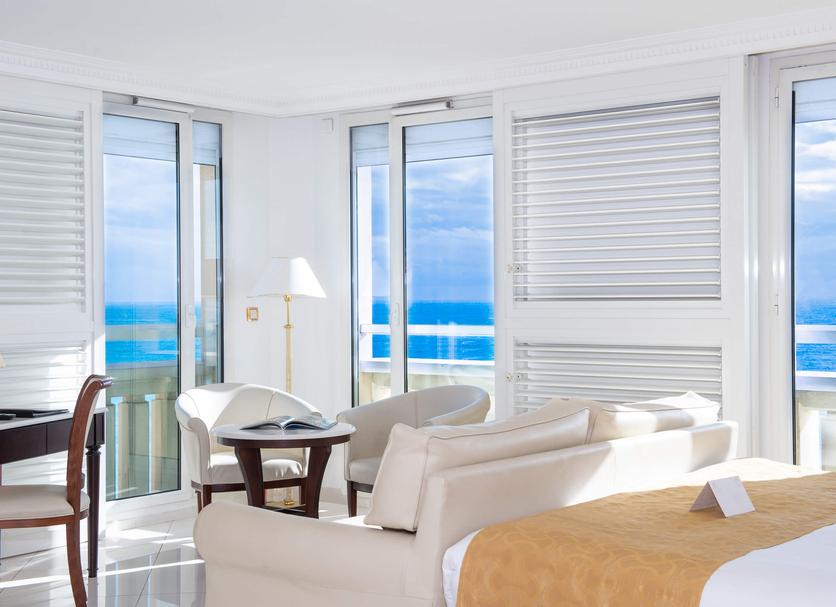
Natural light is another major advantage in coastal accommodation. Large windows can make a room feel more open, while pale materials can amplify daylight. At the same time, strong sunlight makes effective curtains and climate control particularly important.
Travelers should consider the temperature pattern of the room. A beautiful south-facing window can be a wonderful feature during cooler weather but can increase afternoon heat during warmer periods. Reliable air conditioning and easy-to-use controls can therefore be more important than decorative details.
Choosing a Nice Room for a Relaxed Stay
If the hotel is primarily a base for sightseeing, location and transportation may dominate the decision. If the hotel is intended to be a major part of the vacation, then views, balcony space, seating, room size, pool access, and overall atmosphere deserve more attention.
This distinction is useful because travelers often pay for features they barely use. A large leisure facility may have little value for someone who plans to spend every day exploring nearby destinations. Conversely, a beautiful room with a private outdoor area can become highly valuable when the hotel is part of the relaxation plan.
Lyon: Heritage, Food, Business and Contemporary Comfort
Lyon has a distinctive combination of historic architecture, gastronomy, business activity, cultural attractions, and modern urban infrastructure. This makes hotel selection especially dependent on the purpose of the trip.
When comparing Hotels in Lyon, travelers should first identify whether the trip centers on historic exploration, food, business, shopping, events, or a combination of these activities.
Historic accommodation can provide memorable architectural details, including stone walls, traditional windows, timber elements, decorative ceilings, and unusual room shapes. These features can create an atmosphere that feels connected to the city.
However, historic architecture sometimes produces irregular floor plans. Walls may not be perfectly symmetrical, bathrooms can be compact, and corridors may differ from contemporary hotel layouts. Travelers who value charm should still inspect the practical details.
Modern hotels generally provide more predictable layouts. They may offer efficient desks, standardized bathrooms, stronger connectivity, and straightforward circulation. This can be particularly useful for business travelers.
The Ideal Lyon Room for a Business Traveler
A productive hotel room does not need to be enormous. It needs to have a functional desk, comfortable chair, accessible power, reliable internet, adequate lighting, and enough quiet for concentration.
Bed placement also matters. A room that separates the working area from the sleeping area can make it easier to switch mentally between work and rest.
For short business trips, location can be more valuable than additional room size. Saving transportation time can provide more opportunity for meetings, meals, exercise, or rest.
Marseille: Hotel Design With a Strong Coastal Identity
Marseille brings another dimension to French accommodation. Its Mediterranean setting can influence room design through natural materials, bright colors, large windows, coastal views, and relaxed spatial arrangements.
Travelers researching Hotels in Marseille should consider the relationship between the hotel and the rest of the itinerary. Marseille is not a single uniform environment, and the character of the immediate neighborhood can influence the experience considerably.
A harbor-facing room can create a visually memorable stay, while a quieter interior-facing room may provide better conditions for sleep. Travelers should decide which experience they value before selecting the room category.
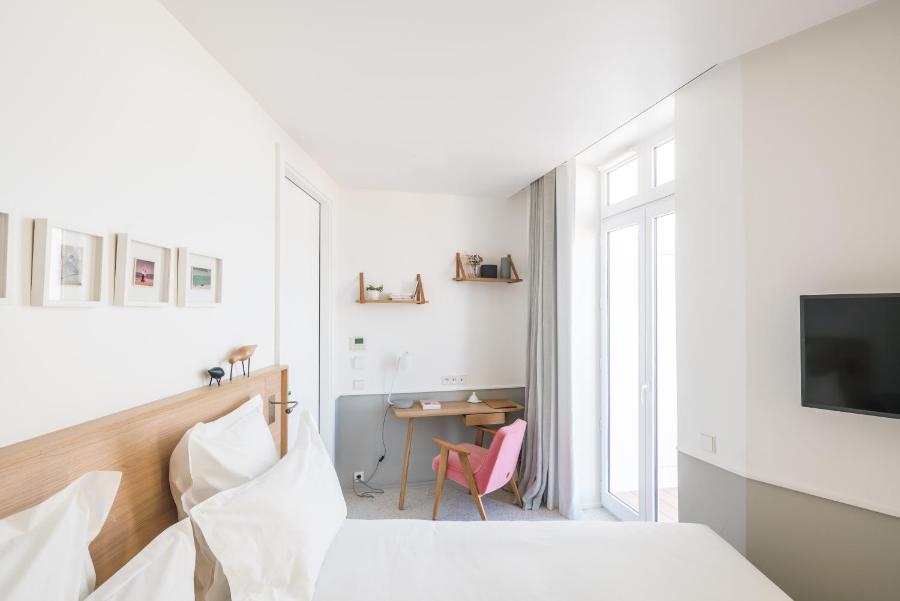
Marseille rooms can look particularly effective when natural materials are used with restraint. Light wood, stone textures, linen, neutral colors, and carefully selected coastal accents can suggest the Mediterranean without turning the interior into a themed space.
The Bed: The Foundation of Every Hotel Stay
No matter how impressive the room design may be, the bed remains one of the most important features. Travelers should consider bed size, mattress feel, pillows, bedding, bed height, and surrounding space.
A large bed is not automatically a comfortable bed. Mattress firmness can vary significantly, and travelers have different preferences. Some prefer a firm surface, while others prefer a softer mattress with deeper cushioning.
Pillow choice can also influence sleep quality. When possible, check whether the hotel offers multiple pillow types or additional pillows on request.
Bedside functionality is equally important. Look for a table or shelf on both sides of the bed, accessible lighting, and convenient charging points. These details become especially noticeable at night.
The position of the bed should also be considered. If it sits directly beneath a strong air-conditioning outlet, some travelers may find the airflow uncomfortable. If the bed is directly beside the entrance, corridor noise may become more noticeable.
Bathrooms: Practical Luxury Matters More Than Decoration
A beautiful bathroom can contribute strongly to the sense of quality, but practical design is what determines whether it remains enjoyable throughout the stay.
Travelers should check whether the room has a walk-in shower, bathtub, combined bath-and-shower arrangement, or another configuration. Couples may want sufficient counter space for two people to prepare comfortably.
Storage should also be evaluated. A bathroom can look sophisticated while offering almost nowhere to place toiletries. Shelves, drawers, vanity space, towel rails, and hooks can make a significant difference.
Mirror lighting is another important feature. Strong overhead lighting can create harsh shadows, while well-positioned side lighting can be more useful for grooming.
Ventilation matters too. Bathrooms with poor ventilation can become humid quickly, especially after showers. This may affect the comfort of the entire room.
Natural Light and the Psychology of Hotel Interiors
Natural light has a major influence on how a hotel room feels. Rooms with generous windows often appear larger, calmer, and more welcoming. Daylight can also reduce the need for artificial lighting during much of the day.
However, natural light needs to be controllable. A room that becomes extremely bright early in the morning can be uncomfortable for travelers who prefer to sleep late. Effective blackout curtains therefore become particularly valuable.
Travelers should examine whether the room has both privacy curtains and blackout curtains. Sheer curtains provide daylight while limiting visibility, whereas heavier curtains can create darkness and privacy.
The direction of the windows can also affect the room. Morning light can be pleasant for early risers, while afternoon light can create a warmer atmosphere later in the day. Neither orientation is universally preferable.
Furniture Layout and the Importance of Empty Space
Good hotel design is not about filling every corner. Empty space is part of the room's functionality. Guests need to walk, open luggage, access wardrobes, move between the bathroom and bed, and sit comfortably.
A room with fewer pieces of furniture can therefore feel more luxurious than a room crowded with expensive objects.
Look for a logical relationship between the main furniture pieces. The bed should not block the primary circulation route. The desk should have sufficient clearance. Seating should not prevent access to windows or storage.
This is especially important in smaller urban rooms, where every square meter has to perform several functions.
Storage and Luggage Management
Storage is one of the least glamorous subjects in hotel marketing, yet it strongly affects comfort. A room with excellent storage allows travelers to unpack and organize their belongings. A room without enough storage forces luggage to remain open on the floor.
For short stays, a luggage bench may be sufficient. For longer trips, a proper wardrobe with shelves and drawers becomes much more useful.
Travelers should also look for enough hangers. A beautiful wardrobe is less useful if it contains only a few hangers for a couple traveling with several outfits.
Suitcase placement should be considered as well. Large luggage requires a stable location where it can be opened without blocking the bed or bathroom entrance.
Workspace, Wi-Fi and Digital Convenience
Modern travelers increasingly combine leisure with digital tasks. They may work remotely, answer emails, upload photographs, organize reservations, communicate with family, or manage business responsibilities.
A compact but comfortable desk can therefore add considerable value. Look for sufficient surface area, good chair design, lighting, and nearby outlets.
Charging infrastructure is equally important. A room with power sockets beside the bed is much more convenient than one where travelers must charge devices across the room.
Internet reliability should be considered through recent guest comments when possible. The simple statement “Wi-Fi available” does not describe speed or consistency.
Soundproofing and the Search for Better Sleep
Noise can originate from several directions: streets, restaurants, corridors, elevators, neighboring rooms, mechanical systems, or nightlife venues.
Travelers who prioritize sleep should look for descriptions mentioning soundproof windows or strong acoustic insulation. However, reviews can be equally informative because guests often mention repeated noise sources.
When reading reviews, search for specific terms rather than relying solely on overall ratings. Words such as quiet, noise, street, elevator, corridor, nightclub, traffic, and construction can reveal useful patterns.
Professional review technique: Give more weight to repeated, specific observations than to one general complaint. “The room was noisy” is less useful than several recent guests independently identifying the same source of noise.
Boutique Hotels and the Value of Individual Character
Boutique properties often appeal to travelers who want accommodation with a distinctive personality. Instead of standardized interiors, they may offer individually designed rooms, unusual color palettes, original furniture, artistic details, or residential-style layouts.
This individuality can be a major advantage, particularly for travelers who see the hotel as part of the destination experience.
However, individuality can also mean less predictability. One room may differ considerably from another in size or layout. Travelers with specific requirements should therefore confirm the exact category before booking.
Larger hotels often provide more standardized accommodation and a broader selection of facilities. The appropriate choice depends on the traveler's priorities rather than the category label alone.
Transportation as Part of Hotel Selection
Hotel location should always be connected to transportation planning. A property may appear close to an attraction on a map while being less convenient for the complete itinerary.
Travelers should consider airports, railway stations, public transportation, walking routes, day trips, restaurants, and car rental requirements.
If a vehicle is needed in the capital, travelers can compare Car rentals in Paris before finalizing the accommodation. This can help determine where vehicle pickup and return fit into the itinerary.
For a broader road trip, Car rentals in France may become useful when the route includes smaller towns, countryside destinations, or coastal areas where rail connections are less convenient.
Travelers based on the Riviera can also investigate Car rentals in Nice when planning excursions beyond the city.
Airport Planning and the First Hotel Night
The arrival day should influence hotel selection. After a long international flight, travelers may value simplicity and convenient transportation more than a complicated route to a visually spectacular property.
For arrivals in Paris, planning around Flights to Paris Charles de Gaulle Airport (CDG) can help establish a realistic schedule for the first night.
Late arrivals may benefit from properties with straightforward check-in procedures. Early departures can make proximity to transportation more important than a distant location chosen purely for atmosphere.
The same principle applies to the final night. A hotel that is excellent for sightseeing may not be the most practical choice before an early airport departure.
Design Styles Found Across French Hotels
French hospitality interiors can range from classical elegance to contemporary minimalism. Parisian properties may use traditional molding, decorative ceilings, soft upholstery, and refined lighting. Mediterranean hotels often use lighter palettes, natural textures, and expansive windows.
Lyon properties may combine heritage architecture with modern furnishings. Marseille accommodation can emphasize coastal light and natural materials.
The most successful interiors usually avoid excessive decoration. Instead, they use a limited number of materials and strong visual elements to create a coherent environment.
A room can feel luxurious through proportion, craftsmanship, texture, and lighting without appearing excessively decorated. This is one reason understated French interiors continue to appeal to travelers seeking sophisticated accommodation.
How to Compare Room Categories Without Getting Distracted
Hotel websites often present several room options, each with carefully selected photographs and descriptive names. Travelers can make better decisions by creating a simple comparison system.
First, record the room size. Second, note the bed configuration. Third, compare bathroom type. Fourth, examine the view. Fifth, check the floor or location within the building if available. Sixth, consider whether the room includes a balcony or separate seating area.
Only after these factors are understood should decorative differences influence the decision.
| Category |
Questions to Ask |
Practical Importance |
| Location |
Is it convenient for the actual itinerary? |
Can reduce daily travel time and transportation complexity. |
| Room size |
How many square meters are available? |
Affects movement, luggage and general comfort. |
| Bed |
What is the exact configuration? |
Directly influences sleeping comfort. |
| View |
What does the category actually face? |
Can significantly affect the atmosphere of the stay. |
| Bathroom |
Shower, bath, storage and counter space? |
Important for everyday convenience. |
| Lighting |
Are there multiple lighting sources? |
Supports sleeping, reading, working and relaxing. |
| Storage |
Wardrobe, drawers and luggage space? |
Especially important for longer stays. |
| Workspace |
Desk, chair, outlets and Wi-Fi? |
Useful for business and digital travel needs. |
| Sound |
Street, elevator or courtyard exposure? |
Can affect sleep quality. |
| Climate |
Heating and cooling controls? |
Important for comfort in different seasons. |
Luxury Is Often About Removing Friction
Travelers frequently associate luxury with expensive materials. In hospitality, however, luxury is often better understood as the absence of inconvenience.
A room feels more refined when the curtains close easily, the bed is comfortable, the bathroom has enough storage, the lighting is intuitive, the temperature is easy to control, and the phone can be charged beside the bed.
A suitcase should have somewhere to go. A wet towel should have somewhere to hang. A traveler should not have to search behind furniture for an electrical outlet.
These small details may not appear in promotional headlines, but they have an enormous effect on the overall impression of a stay.
Choosing a Hotel for Couples
Couples often care about atmosphere, privacy, seating, views, bathroom quality, and comfortable sleeping arrangements. A small lounge area can be particularly useful because it creates a place to sit without spending the entire evening on the bed.
A balcony or terrace can also add value for travelers who enjoy slow mornings or quiet evenings. However, the usability of outdoor space should be considered rather than simply its presence.
For longer stays, couples should pay attention to storage. Two people can quickly fill a small wardrobe, particularly when traveling with different clothing for sightseeing, dining, and changing weather.
Choosing a Hotel for Families
Families need to evaluate room configuration carefully. A larger room is useful, but an interconnected layout or suite may provide more practical separation.
Parents should verify sleeping arrangements rather than assuming that a sofa automatically provides a suitable bed. Maximum occupancy and available bed configurations can vary between room categories.
Bathroom access also becomes important. A family sharing one compact bathroom may have a very different experience from a family with a larger bathroom or multiple facilities.
Storage, elevator access, luggage handling, breakfast options, and proximity to transportation should also be considered before booking.
Hotels for Longer Stays
A room that works perfectly for two nights may become less comfortable during a week-long stay. Longer visits require a more residential mindset.
Look for storage, seating, a practical workspace, laundry options, a comfortable bathroom, and a neighborhood with everyday services.
Access to bakeries, grocery stores, pharmacies, restaurants, public transportation, and laundry facilities can become much more important when travelers stay for several days.
Suites and residence-style rooms can sometimes provide better value for extended stays because the additional space makes it easier to separate sleeping, relaxing, eating, and working.
Seasonal Considerations for French Accommodation
The ideal room can change according to the season. During warmer periods, air conditioning, ventilation, blackout curtains, and window orientation can become major considerations.
During colder periods, heating, warm bedding, bathroom temperature, and window insulation may matter more.
Spring and autumn can provide comfortable conditions for city exploration, but travelers should still consider the hotel's climate-control system because transitional weather can create temperature variations.
Coastal accommodation may also feel different depending on weather conditions. A sea-view room is always visually valuable, but its practical enjoyment depends on how much time travelers plan to spend inside.
How to Evaluate Sustainability Without Losing Comfort
Responsible accommodation can combine sustainability with excellent guest experiences. Travelers may look for energy-efficient lighting, water-saving systems, refillable bathroom amenities, linen-reuse programs, recycling facilities, and responsible sourcing.
The best approach is to consider sustainability as part of overall hotel quality rather than a separate feature.
Efficient systems can also improve comfort when properly implemented. Modern climate control can provide more precise temperatures, while thoughtful lighting can reduce energy consumption without reducing usability.
Reading Reviews for Real Information
Reviews become much more useful when travelers stop treating them as simple scores. Instead, search for recurring details.
One guest might dislike a compact room because they expected more space. Another might appreciate the same room because the design is efficient. Context matters.
Repeated observations are more informative. If many guests independently mention comfortable beds, excellent sound insulation, or limited bathroom storage, those patterns can help predict whether the property fits your priorities.
Review dates also matter. Hotels renovate, replace mattresses, change management, and update services. More recent comments can therefore be more relevant when evaluating current room conditions.
Questions Worth Asking Before Check-In
A short message to the hotel can eliminate uncertainty. Ask whether the room has the exact bed configuration you require, whether the room is located away from elevators if quietness matters, whether luggage can be stored before check-in, and whether the bathroom has the configuration you expect.
If arriving by car, ask about parking arrangements. If arriving late, confirm reception procedures. If traveling with special accessibility requirements, ask precise questions rather than relying on broad descriptions.
Clear questions often produce better results than assuming that a room category means the same thing at every hotel.
Creating a Multi-City French Accommodation Strategy
A multi-city itinerary becomes more enjoyable when each hotel has a specific purpose.
Paris can provide architecture, museums, fashion, dining, and urban energy. Lyon can contribute heritage and gastronomy. Nice can offer Mediterranean light, coastal relaxation, and access to the Riviera. Marseille can introduce a more maritime urban atmosphere.
Travelers do not need to choose identical hotel styles in every city. In fact, different accommodation personalities can make the trip feel more varied.
A classic Parisian room can reinforce the atmosphere of the capital. A contemporary Lyon hotel can provide contrast. A bright Nice room can emphasize the Mediterranean. A coastal Marseille property can connect the final part of the trip to the sea.
How to Build a Hotel Priority Matrix
Before searching, write down the five features that matter most. This simple exercise prevents marketing language from distracting you.
Sample priority matrix for a French city vacation:
- Excellent location for the planned itinerary
- Quiet room for quality sleep
- Comfortable bed and high-quality bedding
- Functional bathroom with adequate storage
- Strong natural light
- Reliable Wi-Fi
- Convenient charging points
- Practical luggage storage
A different traveler may prioritize a balcony, swimming pool, parking, sea view, breakfast, or spa access. The important principle is to define the priorities before browsing rather than after becoming emotionally attached to a particular property.
Value: Compare the Entire Stay, Not Only the Nightly Rate
The cheapest nightly price does not always produce the lowest total travel cost. A distant hotel can require additional transportation every day. A property without breakfast can require more time and planning each morning. A hotel without parking can create additional expenses for drivers.
Travelers should therefore compare the complete cost and convenience of the stay.
Ask how much transportation will be required, how long daily journeys will take, whether breakfast is important, whether parking is needed, and whether a slightly more expensive room provides meaningful improvements.
This broader perspective is especially useful in large cities where location can influence daily expenses and time.
Hotel Photography: Five Details Experienced Travelers Notice
The first detail is circulation. Good rooms provide clear movement around the major furniture.
The second is lighting. Multiple light sources indicate that the room has been designed for different activities.
The third is storage. Even a partial view of the wardrobe can reveal whether the room has practical organization.
The fourth is furniture scale. Oversized furniture in a small room can indicate limited circulation space.
The fifth is window treatment. Curtains, shutters, blinds, and blackout systems can reveal how seriously the room has been designed for privacy and sleep.
The Importance of Quiet Design
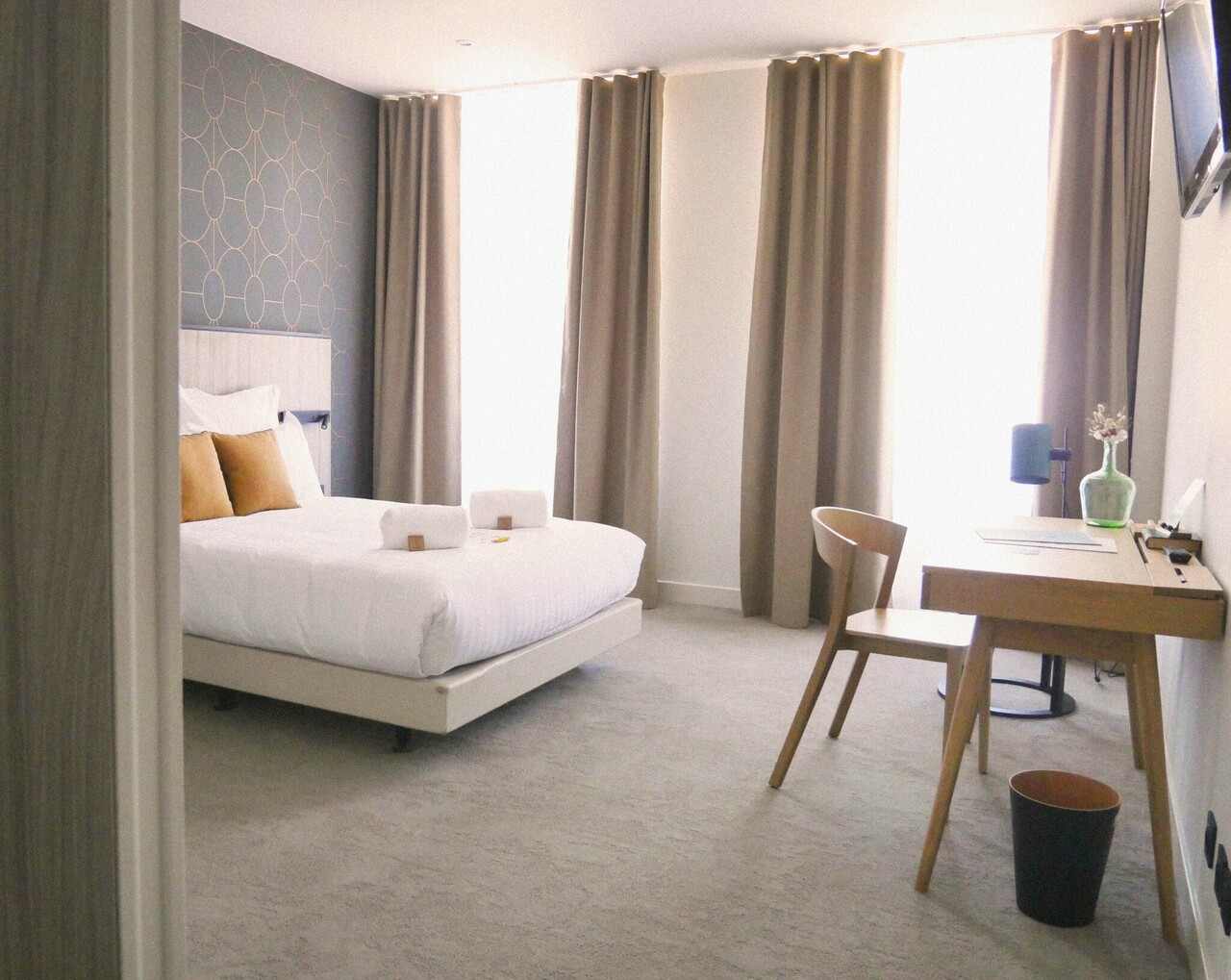
Modern luxury increasingly relies on visual calm. Instead of filling a room with decorative objects, designers may use natural textures, neutral colors, soft fabrics, and carefully selected furniture.
This approach can make a room feel more spacious and relaxing.
Quiet design does not have to mean boring design. Texture can create depth. A patterned wall, sculptural lamp, traditional molding, wooden floor, or carefully selected artwork can provide character without overwhelming the room.
Making the Hotel Part of the Travel Story
The most memorable accommodation often has a sense of place. This does not necessarily require traditional decoration. It can come from architecture, materials, views, proportions, local craftsmanship, or the relationship between indoor and outdoor space.
Parisian accommodation may use the rhythm of a classic apartment. Nice can emphasize Mediterranean daylight. Lyon can incorporate heritage architecture. Marseille can use coastal light and natural materials.
When the hotel feels connected to its destination, the accommodation becomes more than a convenient base. It becomes another layer of the trip.
Professional Hotel Comparison Checklist
Before confirming a French hotel, review every point below:
- Exact neighborhood and surrounding environment.
- Walking distance to the main places on your itinerary.
- Public transportation connections.
- Airport or railway access.
- Actual room size in square meters.
- Exact bed configuration.
- Room orientation and view.
- Balcony or terrace details if applicable.
- Bathroom type and storage.
- Wardrobe and luggage space.
- Bedside charging points.
- Desk and workspace quality.
- Internet availability.
- Heating and air-conditioning.
- Blackout curtains or equivalent.
- Soundproofing or quiet-room options.
- Breakfast arrangements.
- Parking requirements.
- Check-in and check-out times.
- Cancellation conditions.
- Maximum occupancy.
- Accessibility requirements.
- Recent guest comments about the exact room type.
- Whether the photographs represent the category being booked.
- Whether the property supports the actual purpose of the trip.
Frequently Asked Questions About French Hotels
What is the most important factor when choosing a hotel in France?
Location is one of the first factors to evaluate because it influences transportation, walking time, daily schedule, and overall convenience. After choosing a suitable location, compare room size, bed quality, bathroom design, sound, lighting, and other amenities according to your priorities.
Should I always choose the largest hotel room available?
No. Floor area is important, but layout can matter just as much. A well-organized room with efficient storage and comfortable circulation may be more practical than a larger room with poorly positioned furniture.
Is a sea-view room in Nice worth considering?
It can be particularly attractive for travelers who want the hotel to be part of the relaxation experience. Compare the view with room size, balcony quality, noise, location, and how much time you expect to spend inside the hotel.
How should I choose between a Paris street-facing room and a courtyard room?
Choose according to your priorities. A street-facing room may provide a stronger connection to the city, while a courtyard-facing room may offer a calmer environment. Travelers who prioritize sleep often pay particular attention to room orientation and sound insulation.
Are historic French hotels practical?
They can be extremely comfortable, but historic buildings may have unusual layouts. Travelers should check room dimensions, elevators, bathroom configuration, storage, and accessibility rather than assuming that historic character guarantees practical convenience.
Should I rent a car for a French vacation?
The answer depends on the route. Cars can be useful for countryside travel, coastal exploration, and destinations with limited public transportation. Dense city centers can often be easier to explore without a vehicle. Consider the complete itinerary before deciding.
What should I look for in hotel reviews?
Look for repeated, specific observations. Comments about noise, bed comfort, room size, air conditioning, bathroom quality, cleanliness, and staff responsiveness can be more useful than a general rating alone.
What matters most for a longer hotel stay?
Storage, workspace, seating, bathroom organization, laundry access, reliable internet, climate control, and neighborhood convenience become increasingly important as the length of the stay increases.
How can I avoid being misled by attractive hotel photographs?
Check the exact room size, examine several photographs, identify fixed architectural elements, and compare the furniture layout. If available, floor plans can provide an even clearer understanding of the usable space.
What makes a hotel room feel luxurious without being overly decorated?
Balanced proportions, comfortable furniture, quality materials, layered lighting, good bedding, practical storage, natural light, quietness, and intuitive controls often create a stronger sense of luxury than excessive decoration.
A Smarter Way to Finalize Your French Hotel Choice
After comparing several properties, return to the original purpose of the trip. This final step prevents a beautiful hotel from winning your attention simply because its photographs are impressive.
If your trip is built around exploring Paris, ask whether the property makes those daily explorations easier. If the goal is relaxation in Nice, ask whether the room provides the light, views, comfort, and atmosphere you actually want. If Lyon is being visited for food and culture, evaluate whether the location supports those activities. If Marseille is part of a coastal itinerary, consider whether the hotel connects naturally with your route.
Then compare the exact room category rather than the hotel name alone.
Look at square meters, bed configuration, bathroom, view, storage, noise, workspace, lighting, and climate control. These features determine the actual experience far more directly than the hotel's exterior photograph or marketing slogan.
Travelers who approach hotel selection this way often discover that the ideal room is not necessarily the most expensive category. It is the category that solves the specific requirements of the journey.
Building an Elegant French Travel Experience From the Room Outward
A successful French vacation is a collection of interconnected decisions. The flight determines arrival timing. The airport determines the first transportation step. The hotel location determines daily movement. The room determines sleep and recovery. The neighborhood determines spontaneous exploration. Car rental decisions influence regional mobility. Restaurant and sightseeing plans determine how much time travelers actually spend inside the property.
Thinking about these elements together creates a more coherent itinerary.
For example, a traveler arriving in Paris can plan airport transportation, select a central hotel, spend several days exploring the capital, then continue toward Lyon. From Lyon, a rental vehicle may support regional exploration before continuing south toward Nice or Marseille.
Another traveler may choose a slower itinerary, spending several nights in each destination and making the hotel itself an important part of the experience. In that case, room design, views, outdoor space, spa facilities, seating, and atmosphere become more important.
There is no single definition of the perfect French hotel room. The appropriate room is determined by the traveler, the destination, the season, and the rhythm of the itinerary.
Final Booking Philosophy
The most effective hotel selection process is deliberate rather than impulsive. Start with the destination. Define the daily itinerary. Choose the neighborhood. Compare transportation. Examine room categories. Check dimensions. Study the bathroom. Evaluate the bed. Look at lighting, storage, sound, and climate control. Read recent reviews for specific patterns. Then compare the total value of the stay.
French hotels can offer extraordinary variety, from intimate urban rooms to expansive suites and bright Mediterranean accommodation. That variety is an advantage when travelers know how to evaluate it.
The goal is not simply to find a hotel that looks beautiful online. The goal is to choose a place where the room, location, design, service, and transportation all support the journey.
When those elements align, accommodation becomes almost effortless. The room welcomes you after a long day, the neighborhood makes exploration easier, the bed supports restful nights, the bathroom works exactly as it should, and the overall atmosphere reinforces the character of the destination.
That is the real value of thoughtful hotel selection: not simply a beautiful room, but a smoother, more comfortable, and more memorable French travel experience.

Comments
Post a Comment